The Path to Franchise Success: The Seven Stages of Franchise Development
The seven stages of franchise development, from a feasibility study and legal paperwork to franchisee recruitment, training, launch, and performance tracking.

Over the past few years, the franchise industry has grown quickly, and the model has become one of the most powerful ways for a business to expand. Many of the biggest names in food service, including McDonald's, Domino's, and KFC, grew through franchising.
If you run a business and you are weighing how to expand it, franchising is a tempting way to accelerate growth. It is not easy, though. The journey from a single business to a thriving franchise demands effort, hard work, and meticulous planning to navigate franchise development. As the old saying goes, nobody plans to fail, but many fail to plan.
Curious about the franchise development lifecycle and how to work through it? In this guide, we walk through the information you need to build a profitable franchise business. Keep reading.
When you franchise your business, do not rush the decision. Go step by step and understand the seven franchise development stages in detail. That makes it easier to build and expand your franchise network.
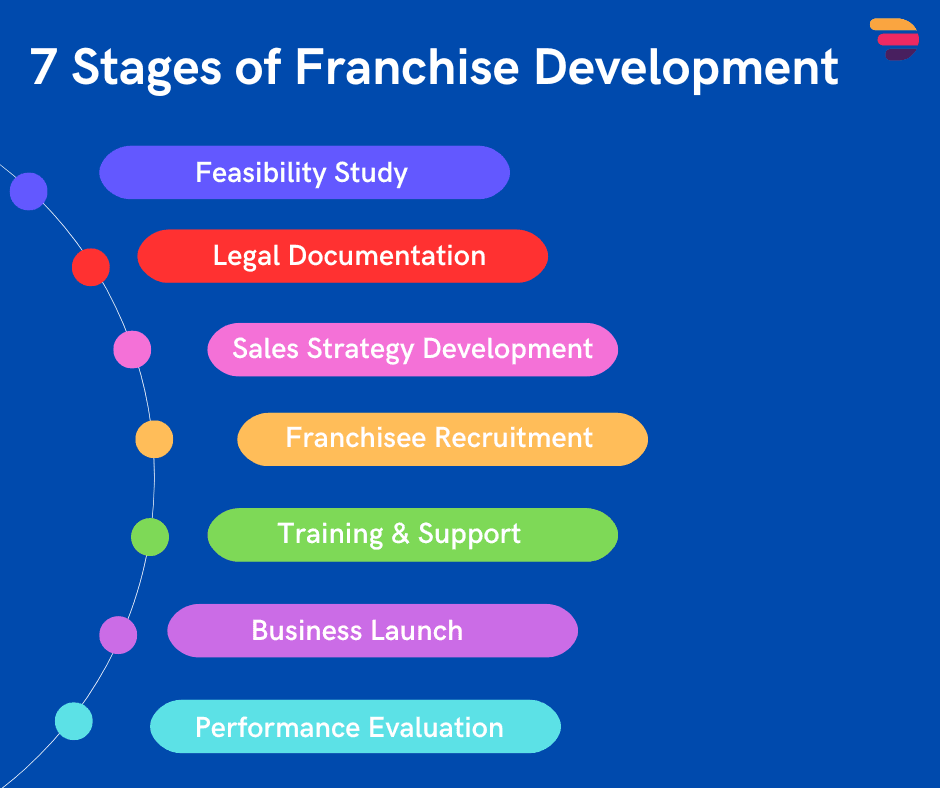
Stage 1: In the beginning, conduct a feasibility study
Before you start to franchise your business, evaluate the answers to questions like: Is your business viable? Is it ready to be franchised? Is franchising right for your business concept? Once you have figured out those answers, consider the other factors that validate your business' feasibility.
Market feasibility
Assess the company's understanding of the marketplace and its costing and pricing systems. Determine the effectiveness of marketing and promotional activities, who the target customers are, and how products or services flow from the company to the end customer.
Product feasibility
Evaluate the quality and unique selling point of the product or service, market demand, pricing strategy, the features and benefits for end users, distribution channels, and potential profitability.
Competitive advantage feasibility
Analyze the unique strengths, capabilities, resources, and attributes that set your business apart from competitors in the marketplace.
Management model feasibility
Carefully examine the organizational structure, management model, leadership competence, and decision-making processes of your business.
Operational feasibility
Determine whether your business has the means it needs, such as a strong supply chain and proper documentation, to operate effectively in a new market.
Economic and financial feasibility
Look closely at your business' financial statements, cash flow projections, and capital requirements. Evaluate its ability to navigate economic downturns and meet financial obligations such as debt payments and operating expenses.
Once you finish the analysis, compile a detailed feasibility report on whether your business is viable to franchise. Include a comprehensive assessment of how fit your business is for franchising, along with recommendations to overcome the pitfalls and challenges that franchising can bring.
Stage 2: The next step, conquer the legal maze
To get the process going, construct a franchise model and complete the necessary paperwork, including the following.
Franchise agreement
This document is vital. It sets out the terms and conditions that govern the relationship between the franchisor and franchisee, and typically covers fees, intellectual property rights, and operational guidelines.
Operations manual
The operations manual is another key part of the franchise model. It gives franchisees detailed instructions and procedures for day-to-day operations and keeps the brand consistent across all franchise units.
Franchise Disclosure Document (FDD)
Create a document listing the disclosure items required of franchisors, such as financial performance, the fees tied to the franchise, and franchisee rights and responsibilities. A well-drafted FDD supports transparency and helps prospective franchisees make an informed decision.
By carefully crafting the franchise model and including these elements, you build a solid foundation for your franchise system. That foundation supports successful partnerships with your franchisees and your business' long-term growth and profitability.
Stage 3: Build a comprehensive sales strategy
Next, draw up a sales strategy that encourages entrepreneurs to invest in your business. As a newcomer in the industry, set a realistic budget to attract, train, and support prospective franchisees. The actual cost depends on the type of business you run, its industry, and the level of support it needs to expand.
Picture this. You run a small business that has not sold its first franchise unit yet. Setting a franchise cost very high makes no sense in that case. Take into account the revenue your business generates today, then settle on a final number. Even large food brands such as McDonald's keep a franchise fee that is modest relative to the revenue an average store generates.
Stage 4: Get the right people on the trail
Now that you understand your business' viability, have completed the legal requirements, and have built a sales strategy, it is time for the next big stage: finding and onboarding the right franchisees.
It can be tempting to accept anyone willing to invest in your business. If things go south, though, a bad franchisee costs far more in headaches and time. Put a strategic recruitment process in place so you find the franchisees who align best with your brand's values, vision, and financial capabilities.
Pro tips
- Develop a clear marketing and communication strategy. Use your business' hard numbers, such as revenue potential, recent sales figures, and charts showing month-on-month or year-on-year growth, to demonstrate the success your business has built since inception.
- People love to hear a brand's story. Share how it started and how the journey has gone so far. It is a great way to grab the attention of prospects and build trust in your brand.
- Channels like social media, franchise expos, and industry events help promote your franchise opportunity and generate leads. Use them to reach a wider audience and raise your brand's visibility.
Stage 5: Lay a strong foundation with franchisee training and support
Develop a hands-on training program that equips your franchisees with the knowledge and skills they need to build their business. The program should be intensive and cover the critical business areas, including operations, marketing, customer service, and brand standards. That preparation lets your franchisees run their unit effectively and efficiently.
If you are new to franchising and unsure how to build a training program, look at how established brands such as McDonald's prepare new franchisees, with months of in-restaurant training that combines seminars, conferences, and one-on-one sessions. Beyond the initial program, set up a system that gives your franchisees ongoing support. This helps them overcome challenges and keep building their skills through mentorship, and it keeps communication and collaboration consistent across all franchise locations.
Stage 6: Ready, set, launch
After the training process, it is time for your franchisees to begin operations. Support them through this crucial phase. Give them a launch plan that covers the essentials, such as site selection, lease negotiations, and store setup. To strengthen their odds, offer guidance on initial marketing and advertising so they establish a strong brand presence in the new market and attract early customers.
Working closely with your franchisees during the pre-opening and grand-opening stages makes for a smooth transition from training to full-scale operations. Your active involvement in setting up each unit helps you and your franchisees refine the business model, spot potential challenges, and pinpoint areas to improve. It sets the stage for a strong start in a new location.
Stage 7: Measure the metrics that matter
Last, but not least, keep your eyes on the key performance indicators that show how your franchise units have performed over time. By consistently monitoring and analyzing these metrics, you gain insight into franchise performance and identify areas to improve. You can also address challenges and make informed decisions that keep your business profitable and competitive.
Summing it up
Now that you know the ins and outs of franchise development, it is clear the journey runs through seven distinct stages, each requiring careful planning, execution, and adaptation. From conceptualization and validation to launch and evaluation, working through each stage with due diligence and strategic foresight helps you grow, build profitability, and set up long-term success. Are you ready to turn your business into a thriving franchise? Use these seven stages of franchise development as your blueprint.
See how Delightree works for your network
Walk through the platform with the team. No slides, just a real look at how it fits the way you operate.